Best for viewers who prefer methodical crime films over explosive set pieces, and who enjoy cat-and-mouse dynamics where all three players feel genuinely dangerous.
Heist Thriller
Crime 101
A career thief, a relentless detective, and an insurance broker collide across the Los Angeles freeway corridor.
Three perspectives. One score. No easy way out.
Editorial Verdict
Why Crime 101 Is Worth Your Time
Crime 101 delivers the kind of heist tension that makes you forget your phone exists. Bart Layton balances three competing perspectives and lets the friction between them carry the weight. The film occasionally stretches past its natural endpoint, but the craft on display is strong enough to keep you locked in.
The decision to shoot on location across Los Angeles instead of relying on studio backlots pays off in every exterior scene. The 101 freeway is not just a backdrop. It becomes part of the story architecture, a constant reminder of how much ground this city covers and how easy it is to disappear inside it.
Blanck Mass's score deserves its own mention. The music does not announce itself with big thematic melodies. Instead, it creates a low-level hum of anxiety that sits underneath scenes and makes even quiet conversations feel like they are happening on the edge of something breaking.
Why This Movie Works
- Bart Layton structures the narrative around three distinct viewpoints and the friction between them keeps the film moving even when the plot slows down.
- The Los Angeles locations feel lived-in rather than staged. Shooting on actual streets instead of heavy soundstage work gives the heist a grounded texture that glossy productions often lose.
- Chris Hemsworth and Mark Ruffalo play opposite types here: Hemsworth pulls back into quiet control while Ruffalo leans into restless obsession, and that reversal gives the film its tension.
Where It Falls Short
- At two hours and nineteen minutes, the film pushes past its natural climax. The third act could have tightened its grip without losing any emotional weight.
- Viewers expecting a fast-moving action thriller may find the methodical pacing frustrating. The film is more interested in process than in spectacle.
Movie Guide
What To Know Before Watching Crime 101
This section combines verified production facts with original editorial context so the page works as a viewing guide rather than stopping at a plot summary.
Official Synopsis
A seasoned jewel thief assembles a crew for what he intends to be his final heist, targeting a high-value score along the 101 freeway corridor in Los Angeles. As the operation takes shape, a disillusioned insurance broker is pulled into the investigation, while a determined detective builds a case that could finally put the elusive crew away. Three people, three agendas, and a city that becomes the board they play on.
The synopsis sketches the heist setup, but the useful part for readers is understanding how Layton structures the film around three intersecting viewpoints that never quite trust each other.
That is where the review adds value beyond the mechanics. The film is less about whether the job succeeds and more about what each person risks by getting this close to the edge.
Source: Amazon MGM Studios, Working Title Films, and supporting factual references for this review
Why This Movie Stands Out
Crime 101 works because it refuses to reduce any of its three main perspectives to a supporting role. The thief is not a villain, the detective is not a hero, and the insurance broker is not just a civilian caught in the middle. Each person carries their own gravity.
The decision to shoot on location across Los Angeles instead of relying on studio backlots pays off in every exterior scene. The 101 freeway is not just a backdrop. It becomes part of the story architecture, a constant reminder of how much ground this city covers and how easy it is to disappear inside it.
Hemsworth plays the thief with restraint rather than bravado. After years of larger-than-life roles, he strips the performance down to quiet competence, watchful eyes, and the kind of calm that only comes from someone who has done this too many times to be nervous about it.
Ruffalo's detective operates on a different frequency entirely. Where Hemsworth withdraws, Ruffalo presses forward. His character is not chasing glory. He is chasing closure, and that distinction makes the pursuit feel heavier than a standard good-versus-evil dynamic.
Blanck Mass's score deserves its own mention. The music does not announce itself with big thematic melodies. Instead, it creates a low-level hum of anxiety that sits underneath scenes and makes even quiet conversations feel like they are happening on the edge of something breaking.
The film draws from Don Winslow's 2020 novella, and Bart Layton's adaptation makes a smart choice: it keeps the procedural detail intact while adding enough emotional friction to prevent the mechanics from taking over completely. You still feel the weight of every decision.
There is a moment in the second act where the heist plan shifts and the film slows down to show the crew recalibrating. It is the kind of scene a lesser movie would rush through to get back to the action. Crime 101 lets it breathe, and that patience is what separates it from standard genre entries.
The $90 million budget shows up on screen, but not in the way a blockbuster spends money. This is a film that invests in locations, camera movement, and performance time rather than digital effects. The result feels tactile, which is exactly what a heist movie needs.
Deep Dive
What Crime 101 Is Really Doing
This is where Crime 101 stops being a simple cat-and-mouse exercise and becomes a study in professional obsession. The film tracks what happens when people who are very good at their jobs meet someone equally skilled on the other side.
The Emotional Center
Crime 101 works because it refuses to reduce any of its three main perspectives to a supporting role. The thief is not a villain, the detective is not a hero, and the insurance broker is not just a civilian caught in the middle. Each person carries their own gravity.
The Los Angeles locations feel lived-in rather than staged. Shooting on actual streets instead of heavy soundstage work gives the heist a grounded texture that glossy productions often lose.
Why The World Feels Distinct
Bart Layton structures the narrative around three distinct viewpoints and the friction between them keeps the film moving even when the plot slows down.
Ruffalo's detective operates on a different frequency entirely. Where Hemsworth withdraws, Ruffalo presses forward. His character is not chasing glory. He is chasing closure, and that distinction makes the pursuit feel heavier than a standard good-versus-evil dynamic.
The film draws from Don Winslow's 2020 novella, and Bart Layton's adaptation makes a smart choice: it keeps the procedural detail intact while adding enough emotional friction to prevent the mechanics from taking over completely. You still feel the weight of every decision.
Where Some Viewers May Pull Back
At two hours and nineteen minutes, the film pushes past its natural climax. The third act could have tightened its grip without losing any emotional weight.
Viewers expecting a fast-moving action thriller may find the methodical pacing frustrating. The film is more interested in process than in spectacle.
Best for viewers who prefer methodical crime films over explosive set pieces, and who enjoy cat-and-mouse dynamics where all three players feel genuinely dangerous.
Official Trailer
Watch Crime 101 Trailer
Visuals
Scenes, Atmosphere, And Key Visuals
These images keep the page close to the movie itself, not just to a text summary.
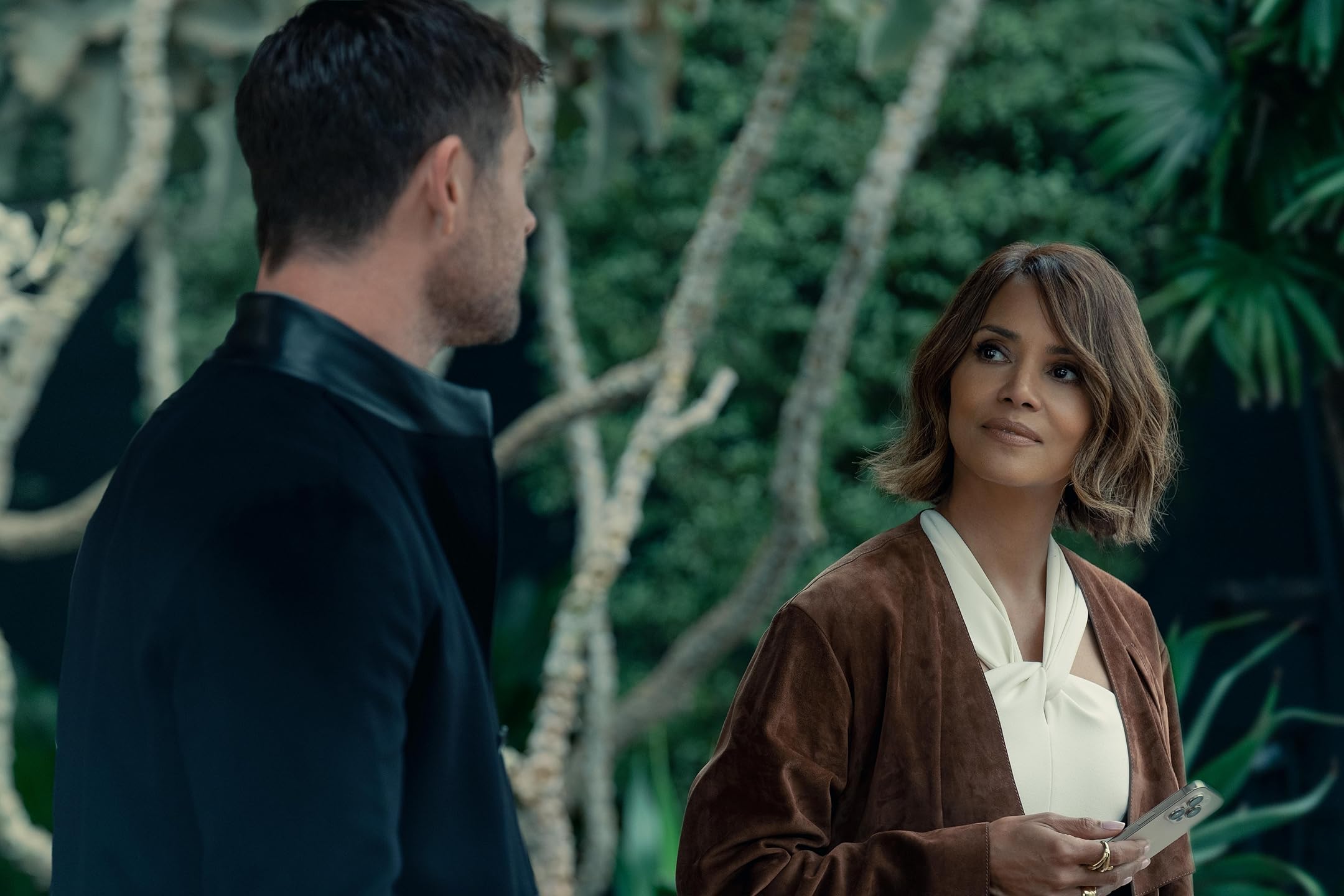
Main Cast
The cast carries the weight of this film because the script relies on performers who can make procedural detail feel personal.
- Chris Hemsworth
- Mark Ruffalo
- Halle Berry
- Barry Keoghan
- Monica Barbaro
- Corey Hawkins
- Jennifer Jason Leigh
- Nick Nolte
Awards And Recognition
Crime 101 did not arrive with a shelf full of awards, but its craft choices and festival positioning tell a clear story about how the industry read it.
- Official Selection - BFI London Film Festival 2025
- Amazon MGM Studios theatrical release, February 2026
- Based on Don Winslow's 2020 novella of the same name
FAQ
Questions Readers Usually Have
These questions focus on the things readers usually want answered before watching: tone, pacing, violence level, audience fit, and whether the heist mechanics hold up.
Is Crime 101 based on a true story?
No. The film is adapted from Don Winslow's 2020 novella of the same name. While the heist feels grounded and procedural, the story and characters are fictional.
How long is Crime 101?
The runtime is 2 hours and 19 minutes. The film maintains strong tension through most of that stretch, though the third act stretches slightly longer than it needs to.
What is the age rating for Crime 101?
Crime 101 is rated R for violence, language, and intense crime-related sequences. It is not suitable for younger viewers without parental guidance.
Is this more of an action movie or a thriller?
It leans thriller. There are action sequences, but the film spends more time on planning, surveillance, and the psychological friction between characters than on shootouts or chases.
Who directed Crime 101?
Bart Layton directed and wrote the screenplay. He is known for blending documentary-style realism with narrative filmmaking, which gives this film its grounded feel.
Does the heist itself feel believable?
Yes. The film takes time to show the mechanics of the operation - the scouting, the timing, the crew coordination - which makes the actual execution feel earned rather than handed to the audience.
Is it worth watching on a big screen or is streaming fine?
The location work and Blanck Mass score benefit from a larger screen and better sound, but the film does not depend on spectacle to work. A good home setup handles it well.
How does this compare to other heist movies?
It sits closer to Heat and Drive in tone than to the Ocean's Eleven end of the spectrum. The focus is on process, tension, and character friction rather than clever tricks or comedy.