Best for viewers who want gritty war mojo inside Star Wars plus layered supporting performances.
Rebel Operational
Rogue One: A Star Wars Story
Brings Star Wars down to the trenches.
A spy thriller inside the galaxy far, far away.
Editorial Verdict
Why Rogue One: A Star Wars Story Is Worth Your Time
It is worth watching because the film grounds Star Wars in wartime logistics while still delivering tactical suspense.
The sound mix mixes gunfire, distant alarms, and whispers from the Force, so the film keeps the galaxy sounding dangerous without relying on lightsabers.
Rogue One built a new kind of Rebel mythology by showing the collateral cost of rebellion, which is why the page keeps circling back to hope, loss, and how the galaxy funds rebellion.
Why This Movie Works
- Rogue One turns Star Wars into a war film: the mission feels like a heist and the Rebels trade explosions for recon, so the genre shift actually refreshes the saga.
- The practical production designÔÇöthe depths of Scarif, the dusty Jedha streets, the cramped corridors of the Rebel shipsÔÇömakes every suspense beat tactile.
- Alan Tudyk's K-2SO and Diego Luna's Cassian keep the tone human; their dialogue gives the film breathing room between the large set pieces.
Where It Falls Short
- Because the movie rushes toward the battle at Scarif, some supporting arcs (Bodhi, Chirrut, Baze) have less room to land emotionally.
- The digital resurrection of Grand Moff Tarkin and Princess Leia still unsettles some viewers, even if it does tie the story closer to A New Hope.
Movie Guide
What To Know Before Watching Rogue One: A Star Wars Story
This section combines confirmed facts with the kind of editorial context that turns Rogue One into a strategic war story instead of a generic tie-in.
Official Synopsis
Jyn Erso joins a rogue squad to steal the Death Star plans before the Empire completes the weapon.
The official synopsis sketches the theft of the Death Star plans, but what readers need is how the film frames that mission as a desperate intelligence operation where every new moment opens a threat.
The review keeps linking the action to the characters who literally carry the film: a rebellious girl, a disillusioned captain, a reprogrammed droid, and a handful of allies who have no expectation of surviving the day.
Source: IMDb, Lucasfilm press material, and interviews with Gareth Edwards and the cast.
Why This Movie Stands Out
Edwards frames unity as the film's visual motif: overlapping parallax in the formation shots, the low-angle shots of Scarif, and the shape of the Rebel crews all echo a single shared purpose.
The sound mix mixes gunfire, distant alarms, and whispers from the Force, so the film keeps the galaxy sounding dangerous without relying on lightsabers.
Michael Giacchino's score introduces militaristic percussion under the familiar Star Wars brass so the emotional core never drifts into nostalgia.
The finale treats the sacrifice as a military fact: cameras stay on the mission, not on who survives, which keeps the stakes consistently fatal.
Rogue One built a new kind of Rebel mythology by showing the collateral cost of rebellion, which is why the page keeps circling back to hope, loss, and how the galaxy funds rebellion.
Deep Dive
What Rogue One: A Star Wars Story Is Really Doing
The deep dive unpacks how Gareth Edwards, cinematographer Greig Fraser, and Industrial Light & Magic used practical sets, handheld camera work, and a muted palette to make this feel like archival combat footage.
The Emotional Center
Edwards frames unity as the film's visual motif: overlapping parallax in the formation shots, the low-angle shots of Scarif, and the shape of the Rebel crews all echo a single shared purpose.
The practical production designÔÇöthe depths of Scarif, the dusty Jedha streets, the cramped corridors of the Rebel shipsÔÇömakes every suspense beat tactile.
Why The World Feels Distinct
Rogue One turns Star Wars into a war film: the mission feels like a heist and the Rebels trade explosions for recon, so the genre shift actually refreshes the saga.
The finale treats the sacrifice as a military fact: cameras stay on the mission, not on who survives, which keeps the stakes consistently fatal.
Where Some Viewers May Pull Back
Because the movie rushes toward the battle at Scarif, some supporting arcs (Bodhi, Chirrut, Baze) have less room to land emotionally.
The digital resurrection of Grand Moff Tarkin and Princess Leia still unsettles some viewers, even if it does tie the story closer to A New Hope.
Best for viewers who want gritty war mojo inside Star Wars plus layered supporting performances.
Official Trailer
Watch Rogue One: A Star Wars Story Trailer
Visuals
Scenes, Atmosphere, And Key Visuals
These images keep the page close to the movie itself, not just to a text summary.
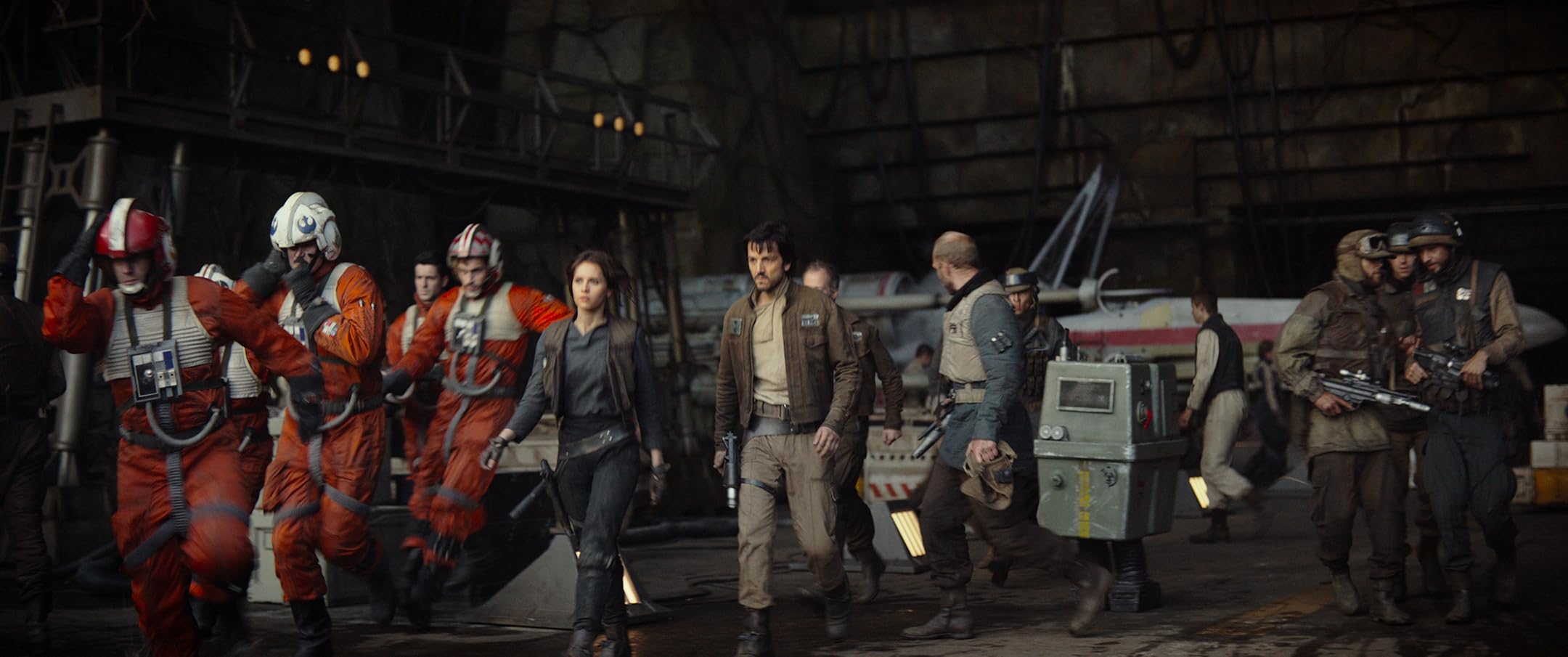
Main Cast
The cast paragraph matters because the movie asks actors to anchor Star Wars mythology with small, human gestures instead of Force powers.
- Felicity Jones
- Diego Luna
- Alan Tudyk
- Ben Mendelsohn
- Donnie Yen
- Riz Ahmed
Awards And Recognition
Awards and nominations underscore the film's craft: the VFX teams, the editors, and the Stargate-level logistics that kept such a sprawling battle grounded.
- Saturn Award 2017 Best Science Fiction Film
- Academy Award 2017 nomination for Best Visual Effects
- BAFTA 2017 nomination for Best Special Visual Effects
FAQ
Questions Readers Usually Have
These FAQs answer the questions readers keep asking: how this ties into A New Hope, why the tonal shift exists, and whether the characters earn their sacrifice.
How does Rogue One link to A New Hope?
It explains where the Death Star plans came from and introduces the planets and characters that set the stage for Leia's transmission.
Does the film still feel like Star Wars without lightsabers?
Yes. The score, production design, and the handful of cameos keep the saga tone while centering a grounded war story.
Who wrote Rogue One?
Chris Weitz and Tony Gilroy wrote the screenplay with story input from John Knoll, Gary Whitta, and George Lucas's original characters.
Is Rogue One appropriate for young viewers?
It is PG-13 for intense space battles, explosions, and a fatalist ending, so younger Star Wars fans may need guidance.
Why is the ending so bleak?
The film treats the mission as a sacrifice piece: the Rebels never expect to survive, and the ending keeps that price as the emotional anchor.
What should the gallery focus on?
Show the tactical spaces: the briefing room, Scarif beach, the processing tower, the K-2SO/Chirrut partnership, and the final transmission.