Best for viewers who like psychological horror, formal precision, and films that reward close rewatching.
Horror Benchmark
The Shining
One of the all-time standards for psychological horror.
Dread built from camera movement, architecture, and collapse.
Editorial Verdict
Why The Shining Is Worth Your Time
The Shining is terrifying less because of jump scares than because Kubrick makes space itself feel hostile. It remains one of the clearest examples of horror built through rhythm, architecture, and emotional collapse.
The Steadicam follows Danny down endless corridors, letting the audience feel panic before the story reveals it.
The final freeze on the 1920s photograph turns the ending into a mythic trap rather than a tidy resolution, so the review treats that choice as the last measure of horror.
Why This Movie Works
- Kubrick choreographs the Overlook as a breathing character; long Steadicam moves, mirrored rugs, and forced symmetry keep the Torrances on a treadmill of dread.
- Jack Nicholson's transition from weary caretaker to unhinged menace remains mesmerizing, every twitch and roar feeling both rehearsed and spontaneous.
- The sound design blends Hallorann's calm voice, low synth drones, and Ligeti/Berlioz bursts so the hotel sounds as haunted as it looks.
Where It Falls Short
- The pacing is deliberately glacial, which may frustrate viewers who expect the jump scares the legend promises.
- Some of the silent, wide-framed scenes risk feeling empty if you are not willing to read the hotel as a character rather than wait for ghosts.
Movie Guide
What To Know Before Watching The Shining
This section pairs official facts with editorial judgment so the page can feel like a guide instead of a straight recap.
Official Synopsis
A family becomes isolated in a remote hotel for the winter, where the father's mental state steadily deteriorates.
The synopsis spells out the isolated family and the Overlook, but the useful part is tracking how silence, weather, and architecture conspire to bend Jack toward violence.
Every calm corridor carries a psychic weight in this adaptation, so the editorial tone has to keep highlighting what the hotel asks of the Torrances before it shows overt hauntings.
Source: IMDb, Warner Bros. press notes, archived Kubrick interviews, and title reference materials.
Why This Movie Stands Out
Kubrick built the massive Overlook interiors at EMI Elstree so he could control every door, light, and pattern, making the hotel's geometry itself a threat.
The Steadicam follows Danny down endless corridors, letting the audience feel panic before the story reveals it.
Wendy Carlos and Rachel Elkind's synth textures meet Penderecki's strings and Berlioz's Dies Irae to keep the soundtrack hovering between ritual and modern dread.
Danny's shining glimpses are emotion-pressure readings that keep the family linked to Hallorann even as the hotel pushes Jack toward violence.
The final freeze on the 1920s photograph turns the ending into a mythic trap rather than a tidy resolution, so the review treats that choice as the last measure of horror.
Deep Dive
What The Shining Is Really Doing
This deep dive unpacks Kubrick's obsession with geometry, sound, and Nicholson's slow burn so readers can see how each frame becomes a pressure cooker.
The Emotional Center
Kubrick built the massive Overlook interiors at EMI Elstree so he could control every door, light, and pattern, making the hotel's geometry itself a threat.
Jack Nicholson's transition from weary caretaker to unhinged menace remains mesmerizing, every twitch and roar feeling both rehearsed and spontaneous.
Why The World Feels Distinct
Kubrick choreographs the Overlook as a breathing character; long Steadicam moves, mirrored rugs, and forced symmetry keep the Torrances on a treadmill of dread.
Danny's shining glimpses are emotion-pressure readings that keep the family linked to Hallorann even as the hotel pushes Jack toward violence.
Where Some Viewers May Pull Back
The pacing is deliberately glacial, which may frustrate viewers who expect the jump scares the legend promises.
Some of the silent, wide-framed scenes risk feeling empty if you are not willing to read the hotel as a character rather than wait for ghosts.
Best for viewers who like psychological horror, formal precision, and films that reward close rewatching.
Official Trailer
Watch The Shining Trailer
Visuals
Scenes, Atmosphere, And Key Visuals
These images keep the page close to the movie itself, not just to a text summary.
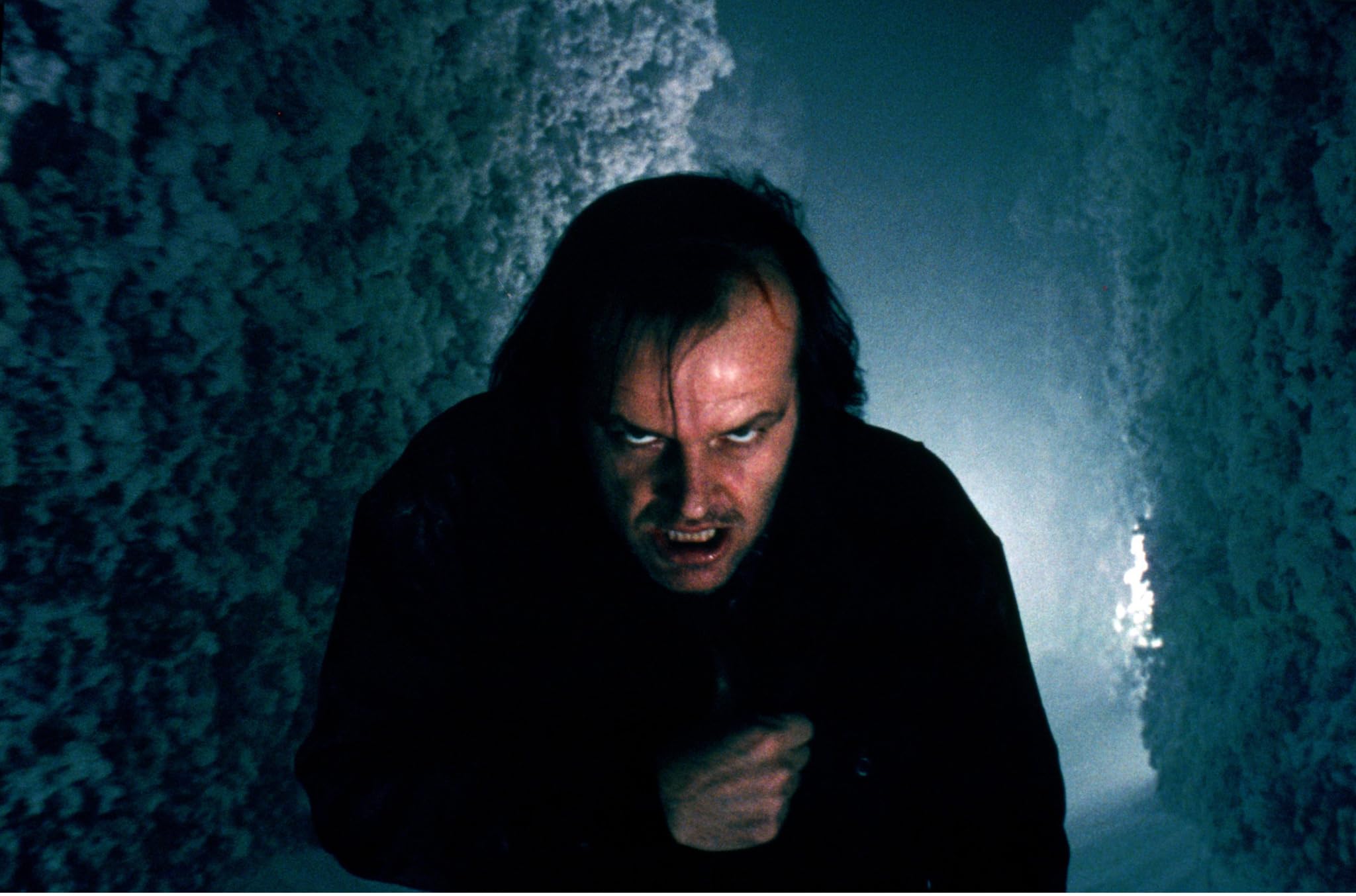
Main Cast
The cast list matters because the film depends on performers who can sell both domestic tenderness and sudden, unhinged terror.
- Jack Nicholson
- Shelley Duvall
- Danny Lloyd
- Scatman Crothers
- Barry Nelson
- Philip Stone
- Joe Turkel
- Tony Burton
Awards And Recognition
The awards lane mixes genre praise, later cultural honors, and the peculiar Razzie attention that became part of the film's mythology.
- National Film Registry (2018)
- Saturn Award Best DVD/Video Release (2001)
- Saturn Award nomination (2013)
- Razzie nominations (1981)
FAQ
Questions Readers Usually Have
These FAQs answer the recurring questions readers still ask before returning to the Overlook: tone, fidelity, pacing, and whether the dread still lands.
How long is The Shining?
The most widely used cut runs 2 hours and 26 minutes (146 minutes), which gives Kubrick room to build a slow, claustrophobic rhythm.
Is Kubrick's movie faithful to Stephen King's novel?
It keeps the Torrance family, the hotel, and the shining, but Kubrick rearranged the ending, trimmed exposition, and made architecture the real antagonist.
Who composed the score?
Wendy Carlos and Rachel Elkind provide the synth backbone while Penderecki, Ligeti, and Berlioz cues keep the film grounded in both horror and ritual.
Is The Shining still scary today?
Yes, because the dread is built through isolation, architecture, and psychological pressure rather than jump scares, so it ages like a chamber horror.
What does Danny's shining allow?
Danny's ability hints at past violence and future danger, creating the only real lifeline to Hallorann and a way to interpret the Overlook's manipulations.
Are there different cuts?
Several TV and director's cuts exist, but this review focuses on the 2h 26m theatrical edit, which is the one theaters and restorations keep returning to.