Best for viewers who crave big-screen wonder plus a human story about sacrifice, regret, and the cost of hope.
Dream Voyage
Interstellar
A father leaves home for a cosmic rescue mission.
When every second counts, do you sacrifice the present for a promised future?
Editorial Verdict
Why Interstellar Is Worth Your Time
The movie soars whenever it trusts the emotional score, but the middle act's explanatory speeches can cool the momentum a little. Still, the craft, the scale, and the father-daughter heartbeat make it a worthy voyage.
Nolan leans into relativity, but he never forgets to recount what those math rules do to Cooper and Murph's trust, so the physics remains a source of narrative tension.
The speeches about love could feel heavy-handed, but they also reflect the movie's urge to elevate emotion to the force that moves humanity through impossible odds.
Why This Movie Works
- Large-format photography and practical spacecraft sets keep the distances tangible, so even the most abstract sequences feel physically grounded.
- The Cooper-Murph bond makes the enormity of the mission personal: every wormhole jump is measured against a child left waiting in a bedroom.
- Hans Zimmer's organ tones and the IMAX framing give the film a vibration that makes even silent vacuum sequences hum with emotional weight.
Where It Falls Short
- The middle act leans on exposition-heavy speeches about time, which cools the momentum built by the earlier urgency.
- Some supporting characters stay in service to the mission and rarely demand emotional attention of their own.
Movie Guide
What To Know Before Watching Interstellar
This section anchors the mission in Cooper's emotional line, because the NASA facts gain meaning when you keep looking back at what Murph is waiting for.
Official Synopsis
In a near future shaped by dust storms and famine, NASA sends Cooper through a wormhole to scout habitable worlds. The mission is also a love letter: every light-year he crosses is measured against how the clock ticks back home in Murph's bedroom.
The synopsis sketches the wormhole plan, but the review needs to keep reminding readers that every jump distances Cooper from Murph and closer to the risk of never returning.
Every procedural beat also tracks what time does to the people left behind; that is why the editorial guidance focuses on how the mission warps clocks and feelings at the same time.
Source: NASA briefing notes, Nolan interviews, and production logs referenced for this review
Why This Movie Stands Out
Interstellar keeps linking planetary stakes to the personal poetry of a father who cannot be in two places at once, which keeps the scale from feeling detached.
Nolan leans into relativity, but he never forgets to recount what those math rules do to Cooper and Murph's trust, so the physics remains a source of narrative tension.
The practical textures, from the dust-choked farmlands to the snow fortress and the spacecraft, keep the film tactile even when it ventures into abstract speculation.
The film wrestles with stewardship, drought, and sacrifice; the deeper value is when those problems feel like invitations to act instead of mere bleak mood pieces.
The speeches about love could feel heavy-handed, but they also reflect the movie's urge to elevate emotion to the force that moves humanity through impossible odds.
The ending is less about solving a puzzle and more about Cooper choosing to stop measuring truth, which turns the final reunion into the emotional payoff.
Deep Dive
What Interstellar Is Really Doing
The deep dive explains how Nolan uses relativity, practical sets, and score to make cosmic wonder feel deeply personal.
The Emotional Center
Interstellar keeps linking planetary stakes to the personal poetry of a father who cannot be in two places at once, which keeps the scale from feeling detached.
The Cooper-Murph bond makes the enormity of the mission personal: every wormhole jump is measured against a child left waiting in a bedroom.
Why The World Feels Distinct
Large-format photography and practical spacecraft sets keep the distances tangible, so even the most abstract sequences feel physically grounded.
The film wrestles with stewardship, drought, and sacrifice; the deeper value is when those problems feel like invitations to act instead of mere bleak mood pieces.
The ending is less about solving a puzzle and more about Cooper choosing to stop measuring truth, which turns the final reunion into the emotional payoff.
Where Some Viewers May Pull Back
The middle act leans on exposition-heavy speeches about time, which cools the momentum built by the earlier urgency.
Some supporting characters stay in service to the mission and rarely demand emotional attention of their own.
Best for viewers who crave big-screen wonder plus a human story about sacrifice, regret, and the cost of hope.
Official Trailer
Watch Interstellar Trailer
Visuals
Scenes, Atmosphere, And Key Visuals
These images keep the page close to the movie itself, not just to a text summary.
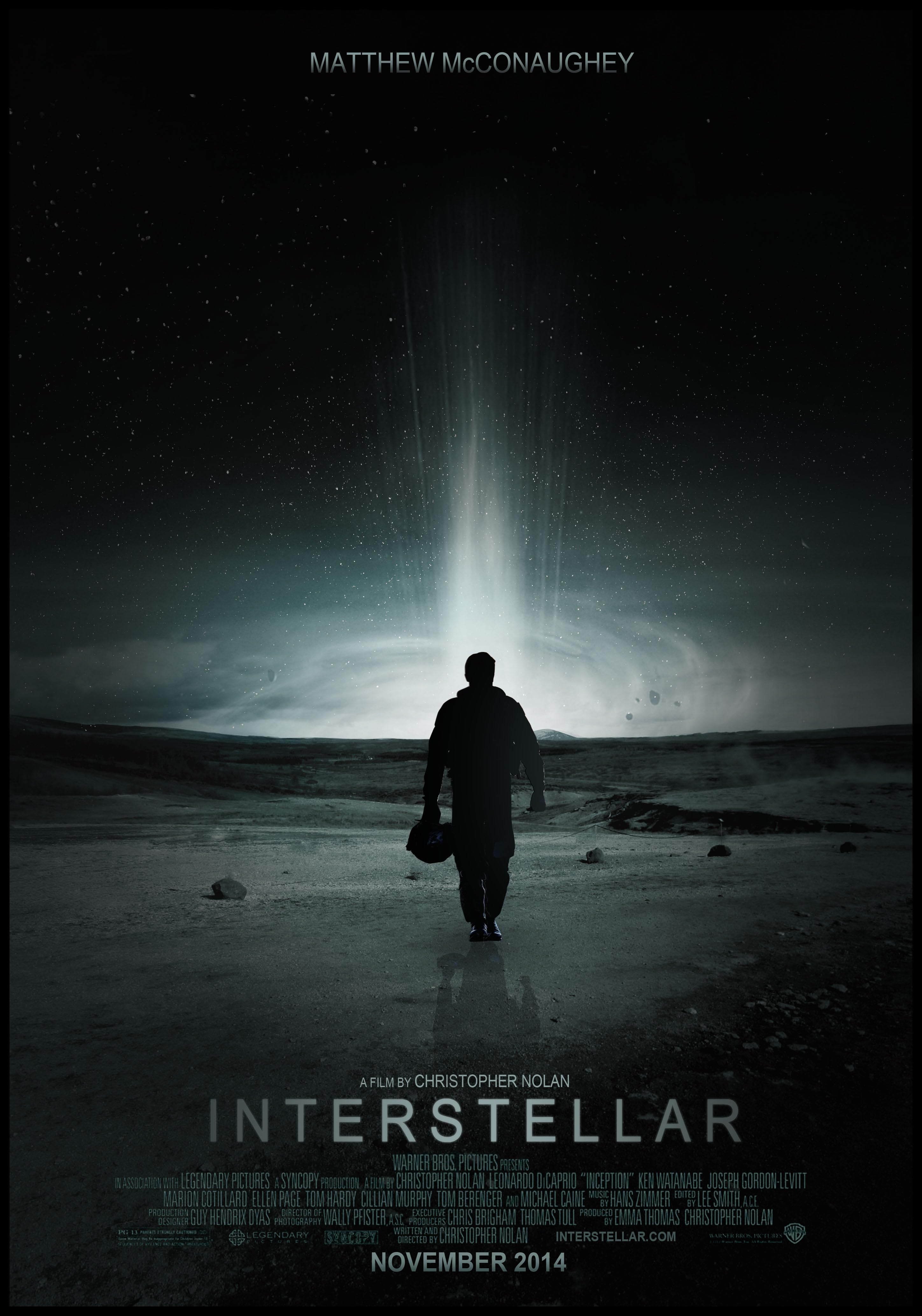
Main Cast
The cast list matters because each performer must play both mission specialist and emotional anchor for the Cooper-Murph story.
- Matthew McConaughey
- Anne Hathaway
- Jessica Chastain
- Michael Caine
- Mackenzie Foy
Awards And Recognition
Interstellar's technical awards, especially for visual effects, underline how high craft supported the existential ambition.
- Won the Academy Award for Best Visual Effects at the 87th Academy Awards
- Also received Oscar nominations for Original Score, Production Design, Sound Editing, and Sound Mixing
FAQ
Questions Readers Usually Have
These FAQs answer the questions readers usually ask before committing to a long, science-laced drama: how confusing, how theatrical, and how emotional the ride actually is.
How long is Interstellar?
The movie runs 169 minutes, which gives Nolan space to stretch time without losing the narrative rhythm.
Who directed and wrote Interstellar?
Christopher Nolan directed the film and co-wrote the screenplay with his brother Jonathan Nolan to keep a single voice on both craft and concept.
What genre is Interstellar?
It blends adventure, drama, and science fiction, but the emotional drama between Cooper and Murph is just as essential as the cosmic premise.
Is Interstellar more emotional or more technical?
Both. The science frames the stakes, but the father-daughter bond is what keeps the technical material from feeling cold.
Is Interstellar worth watching for visuals alone?
Yes. The IMAX photography, practical spacecraft textures, and Zimmer's score make it a sensory experience even if the ideas sometimes outpace the emotion.
Does Interstellar explain too much?
It can. Nolan wants the physics readable, so a handful of scenes shift into lecture mode, which may slow the momentum for viewers craving more mystery.
Does the movie work better in theaters or at home?
A large screen and immersive sound amplify the sense of scale, but the layered writing also rewards repeat home viewings.
Is Interstellar appropriate for younger viewers?
It is rated PG-13 but contains sustained peril, disaster imagery, and emotionally intense separation, so mature teens should watch it with context.