Best for viewers who respond to tactile futuristic design, emotionally readable sci-fi, and war stories that care more about atmosphere and moral tension than airtight lore.
Sci-Fi Spotlight
The Creator
A big-screen AI war story sold on spectacle, but the real hook is whether its emotional core lands as hard as its visuals.
Visual spectacle, AI mythology, and emotional stakes in a single flagship review.
Editorial Verdict
Why The Creator Is Worth Your Time
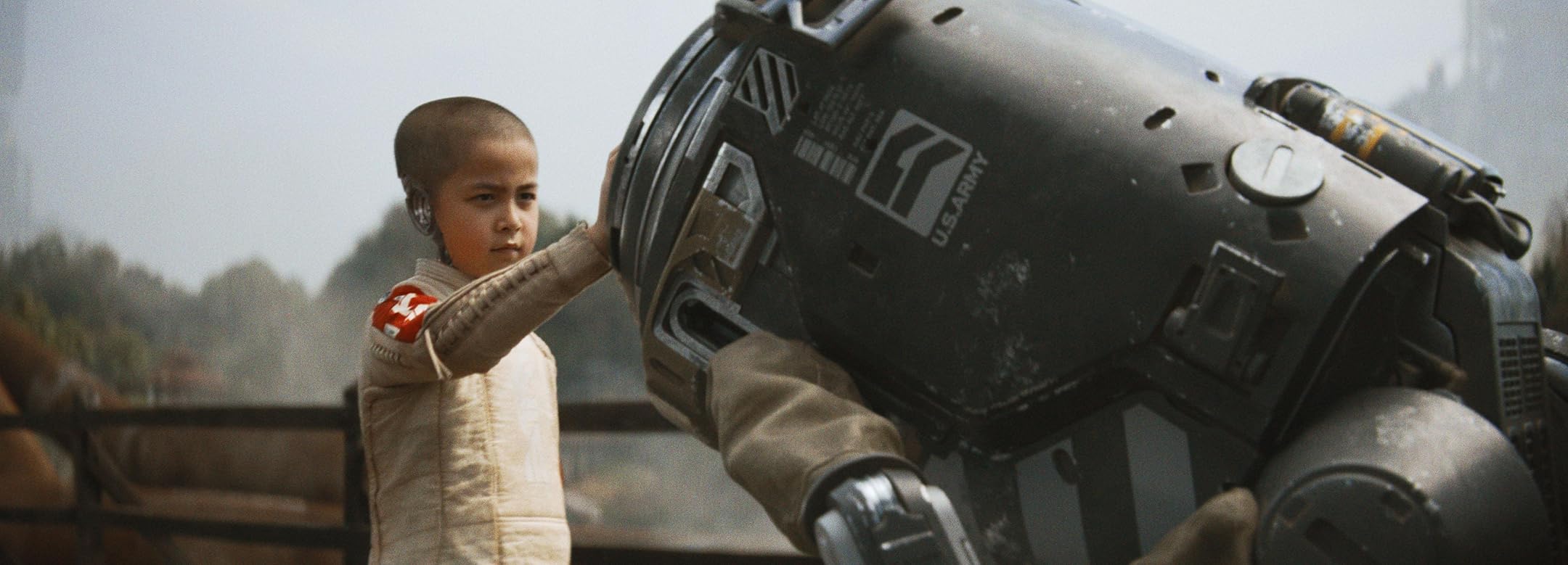
The Creator succeeds when it stops trying to impress with pure scale and instead lets its central relationship carry the film. Gareth Edwards gives the movie a huge visual footprint, but the most durable part of the experience is the uneasy tenderness between Joshua and Alphie inside a world built on fear of artificial life.
What makes the movie useful for conversation is not only the spectacle. It gives viewers a cleaner entry point into questions about personhood, military propaganda, grief, and how quickly language can turn living beings into targets.
That choice will divide audiences. Viewers who want hard-rule sci-fi may find the setting impressionistic, but anyone drawn to tactile futurism will probably respond to how the movie fuses battlefield tension with spiritual and social imagery.
Why This Movie Works
- The visual world-building is the film's biggest advantage: the machinery, landscapes, military hardware, and urban textures make the setting feel inhabited instead of merely polished.
- The relationship between Joshua and Alphie gives the movie a moral tension that is stronger than the mission plot on its own, which is why the quieter scenes often stay with viewers longer than the firefights.
- The film uses AI less as a novelty device and more as a way to talk about grief, propaganda, spiritual identity, and the speed with which institutions turn living beings into acceptable targets.
Where It Falls Short
- Some emotional turns arrive before every supporting character has been fully developed, so a few decisions land more as momentum than as deeply prepared drama.
- Viewers looking for rigorous systems-based science fiction may find the movie frustrating because it prefers mood, metaphor, and visual coherence over detailed rule-building.
Movie Guide
What To Know Before Watching The Creator
This section combines official facts with original editorial context, so the page works as a review guide instead of stopping at premise and metadata.
Official Synopsis
In a future shaped by open conflict between human forces and advanced artificial intelligence, Joshua is sent to eliminate the architect of a weapon that could change the balance of the war. What begins as a military assignment shifts into something more personal once the supposed weapon turns out to be a childlike AI presence whose existence reframes the entire mission.
The synopsis sets up the war, the mission, and the central AI-child reveal, but the useful part for readers is understanding how that premise becomes a question of grief, propaganda, and personhood once the movie starts moving.
That is where the page adds value beyond plot. The review should make clear how much of the film's power comes from emotional tension, visual scale, and the way the story reframes who is allowed to count as fully alive.
Source: 20th Century Studios and supporting factual references for this review
Why This Movie Stands Out
The Creator works best when it treats science fiction as a moral environment instead of a puzzle box. Gareth Edwards builds a large-scale conflict, but the film stays emotionally readable because Joshua and Alphie keep pulling the war back down to a human level.
What makes the movie useful for conversation is not only the spectacle. It gives viewers a cleaner entry point into questions about personhood, military propaganda, grief, and how quickly language can turn living beings into targets.
For many viewers, the main reason to watch is the blend of scale and intimacy. The production design sells a future shaped by machine intelligence, while the central relationship keeps the film from becoming only a display reel.
The film also benefits from how its world feels lived-in rather than over-explained. Instead of pausing for dense exposition, it lets costume design, signage, vehicles, and landscape do much of the storytelling work.
That choice will divide audiences. Viewers who want hard-rule sci-fi may find the setting impressionistic, but anyone drawn to tactile futurism will probably respond to how the movie fuses battlefield tension with spiritual and social imagery.
Its release profile matters too: this is not a tiny chamber drama hiding inside a genre shell. It was mounted as a broad theatrical science-fiction event, and that ambition shows up in the sound design, the ultra-wide framing, and the constant sense of distance between human fragility and machine-scale warfare.
Deep Dive
What The Creator Is Really Doing
This is where The Creator stops being just a futuristic pursuit story and becomes a movie about grief, belief, militarized language, and the moral shortcuts people take when they decide who does or does not deserve empathy.
The Emotional Center
The Creator works best when it treats science fiction as a moral environment instead of a puzzle box. Gareth Edwards builds a large-scale conflict, but the film stays emotionally readable because Joshua and Alphie keep pulling the war back down to a human level.
The relationship between Joshua and Alphie gives the movie a moral tension that is stronger than the mission plot on its own, which is why the quieter scenes often stay with viewers longer than the firefights.
Why The World Feels Distinct
The visual world-building is the film's biggest advantage: the machinery, landscapes, military hardware, and urban textures make the setting feel inhabited instead of merely polished.
The film also benefits from how its world feels lived-in rather than over-explained. Instead of pausing for dense exposition, it lets costume design, signage, vehicles, and landscape do much of the storytelling work.
Its release profile matters too: this is not a tiny chamber drama hiding inside a genre shell. It was mounted as a broad theatrical science-fiction event, and that ambition shows up in the sound design, the ultra-wide framing, and the constant sense of distance between human fragility and machine-scale warfare.
Where Some Viewers May Pull Back
Some emotional turns arrive before every supporting character has been fully developed, so a few decisions land more as momentum than as deeply prepared drama.
Viewers looking for rigorous systems-based science fiction may find the movie frustrating because it prefers mood, metaphor, and visual coherence over detailed rule-building.
Best for viewers who respond to tactile futuristic design, emotionally readable sci-fi, and war stories that care more about atmosphere and moral tension than airtight lore.
Official Trailer
Watch The Creator Trailer
Visuals
Scenes, Atmosphere, And Key Visuals
These images keep the page close to the movie itself, not just to a text summary.
Main Cast
The cast matters here because the film needs performers who can sell both battlefield urgency and unusual tenderness. Without that balance, the movie would flatten into atmosphere and hardware.
- John David Washington
- Gemma Chan
- Ken Watanabe
- Sturgill Simpson
- Madeleine Yuna Voyles
- Allison Janney
- Amar Chadha-Patel
Awards And Recognition
Recognition for The Creator makes sense when viewed through craft. Even viewers mixed on the narrative often point to the visual ambition and sound work as the clearest evidence that it aimed higher than disposable studio sci-fi.
- 2024 Academy Award nomination for Visual Effects
- 2024 Academy Award nomination for Sound
FAQ
Questions Readers Usually Have
These questions focus on the things readers usually want answered before watching: tone, visuals, technical density, audience fit, and whether the movie lands more as spectacle or as emotional sci-fi.
How long is The Creator?
According to 20th Century Studios, the runtime is 2 hours and 13 minutes.
Who directed and wrote The Creator?
The film was directed by Gareth Edwards and the screenplay is credited to Gareth Edwards and Chris Weitz on the official studio page.
What genre is The Creator?
20th Century Studios lists it as Action, Adventure, and Science Fiction.
Why do sci-fi fans keep coming back to The Creator?
The appeal is the combination of strong visual world-building, a war story with emotional stakes, and a central AI-child dynamic that gives the ideas an immediate human face.
Is The Creator worth watching for visuals alone?
If production design, scale, and atmosphere matter to you, yes. Even viewers who find the plotting uneven often respond to the film's visual ambition and sound-driven sense of scale.
Is The Creator more reflective than technical?
Mostly yes. The movie is less interested in laying out airtight AI mechanics than in exploring war, belief, grief, and how people justify violence against beings they refuse to see as fully alive.
Does the movie play best at home or on a large screen?
A large screen helps. The extra width of the compositions and the heavy emphasis on sound, scale, and distant machinery make the film land better when the presentation has room to breathe.
What kind of action should viewers expect?
The action is built around military pursuit, raids, aerial destruction, and sustained gunfire rather than superhero-style choreography. It feels closer to a war film translated into a futuristic setting.
Is it appropriate for younger sci-fi fans?
It stays within a PG-13 lane, but it still includes battlefield violence, disturbing images, and emotional material tied to children in danger, so tone matters as much as the rating.