Best for viewers who like puzzles, practical stunts, and an emotional through-line that refuses to be sidelined.
Dream Heist
Inception
A heist that steals back grief from the dream layers.
Trusting the architecture is hard; trusting the heart is harder.
Editorial Verdict
Why Inception Is Worth Your Time
The movie soars whenever it lets the emotional score breathe, but its need to explain every rule slows the middle act a hair too much. I still trust the craft, but I wanted more mystery in the places that felt most haunted.
The van roll and hallway fight buy you something beyond spectacle: the edits stretch time enough to let fear linger, so the viewer feels the physical cost of falling through rotating realities.
Mal moves through the film as projection and accusation, forcing Cobb to relive the night he abandoned her. That tension is why the movie's climax is as much a therapy session as a heist payoff.
Why This Movie Works
- The rotating hallway fight still feels fresh because Nolan built the set to bend gravity, so the disorientation mirrors how Cobb's control evaporates as the dreams stack.
- Zimmer's slowed motif turns the heist into a memory in motion, letting grief leak through the synth brass even when the gang is still scheming.
- Ariadne keeps recalibrating the film for the audience: her curiosity lets Nolan explain the rules without flattening Cobb's emotional fragility.
Where It Falls Short
- The middle act leans on lectures about kicks and time dilation, which cools the momentum that the opening and finale build so successfully.
- Secondary figures like Saito and Yusuf do the work of plotting, but they rarely land as fully lived humans beyond their place in the scheme.
Movie Guide
What To Know Before Watching Inception
This section recaps official facts while mapping them back to Cobb's emotional stakes, because the heist alone does not explain why Inception still feels personal.
Official Synopsis
Dom Cobb is hired for the opposite of extraction: planting an idea in Robert Fischer's subconscious. Building nested dream levels, Cobb and the team run into unexpected resistance when his memories of Mal collapse the rules from within.
The synopsis outlines the layered con, but the review needs to keep tracing how each layer also forces Cobb to confront Mal's dismissal of his grief.
Every procedural beat pairs with a memory; that is why the editorial guidance here cares about trust, timing, and what Nolan intends the dreamscape to reveal about loss.
Source: IMDb, Warner Bros. press materials, and Nolan interviews cited for this review
Why This Movie Stands Out
Inception keeps building dream architecture, but the emotional tension is what gives each floor weight: Cobb's memories shift every time the team drops deeper, so the heist becomes a live documentary of grief.
The van roll and hallway fight buy you something beyond spectacle: the edits stretch time enough to let fear linger, so the viewer feels the physical cost of falling through rotating realities.
Practical builds like the snow fortress, the hotel set, and the hallway keep the stakes tangible, while digital touches only expand the perception of scale without replacing the tactile peril.
Zimmer's slowed brass motif is not a flourish; it becomes the emotional gravity well that drags every triumphant kick back toward grief.
Mal moves through the film as projection and accusation, forcing Cobb to relive the night he abandoned her. That tension is why the movie's climax is as much a therapy session as a heist payoff.
Nolan slows things down between each big set piece so we can hear the echoes of Cobb's guilt. That pacing choice keeps the film from becoming a montage, even when it could have easily turned into a technical demo.
The ending is less about solving the totem and more about Cobb choosing to stop measuring truth, which turns the spinning top into a character beat rather than a trick.
Each dream layer runs on different clocks, but Nolan uses that variance to contrast the rational plan with the irrational habits Cobb can't shake.
Deep Dive
What Inception Is Really Doing
The deep dive tracks how Nolan uses dream architecture to blur action with intimacy, and why the emotional tension between Cobb and his past keeps the film grounded.
The Emotional Center
Inception keeps building dream architecture, but the emotional tension is what gives each floor weight: Cobb's memories shift every time the team drops deeper, so the heist becomes a live documentary of grief.
Zimmer's slowed motif turns the heist into a memory in motion, letting grief leak through the synth brass even when the gang is still scheming.
Why The World Feels Distinct
The rotating hallway fight still feels fresh because Nolan built the set to bend gravity, so the disorientation mirrors how Cobb's control evaporates as the dreams stack.
Zimmer's slowed brass motif is not a flourish; it becomes the emotional gravity well that drags every triumphant kick back toward grief.
Nolan slows things down between each big set piece so we can hear the echoes of Cobb's guilt. That pacing choice keeps the film from becoming a montage, even when it could have easily turned into a technical demo.
Where Some Viewers May Pull Back
The middle act leans on lectures about kicks and time dilation, which cools the momentum that the opening and finale build so successfully.
Secondary figures like Saito and Yusuf do the work of plotting, but they rarely land as fully lived humans beyond their place in the scheme.
Best for viewers who like puzzles, practical stunts, and an emotional through-line that refuses to be sidelined.
Official Trailer
Watch Inception Trailer
Visuals
Scenes, Atmosphere, And Key Visuals
These images keep the page close to the movie itself, not just to a text summary.
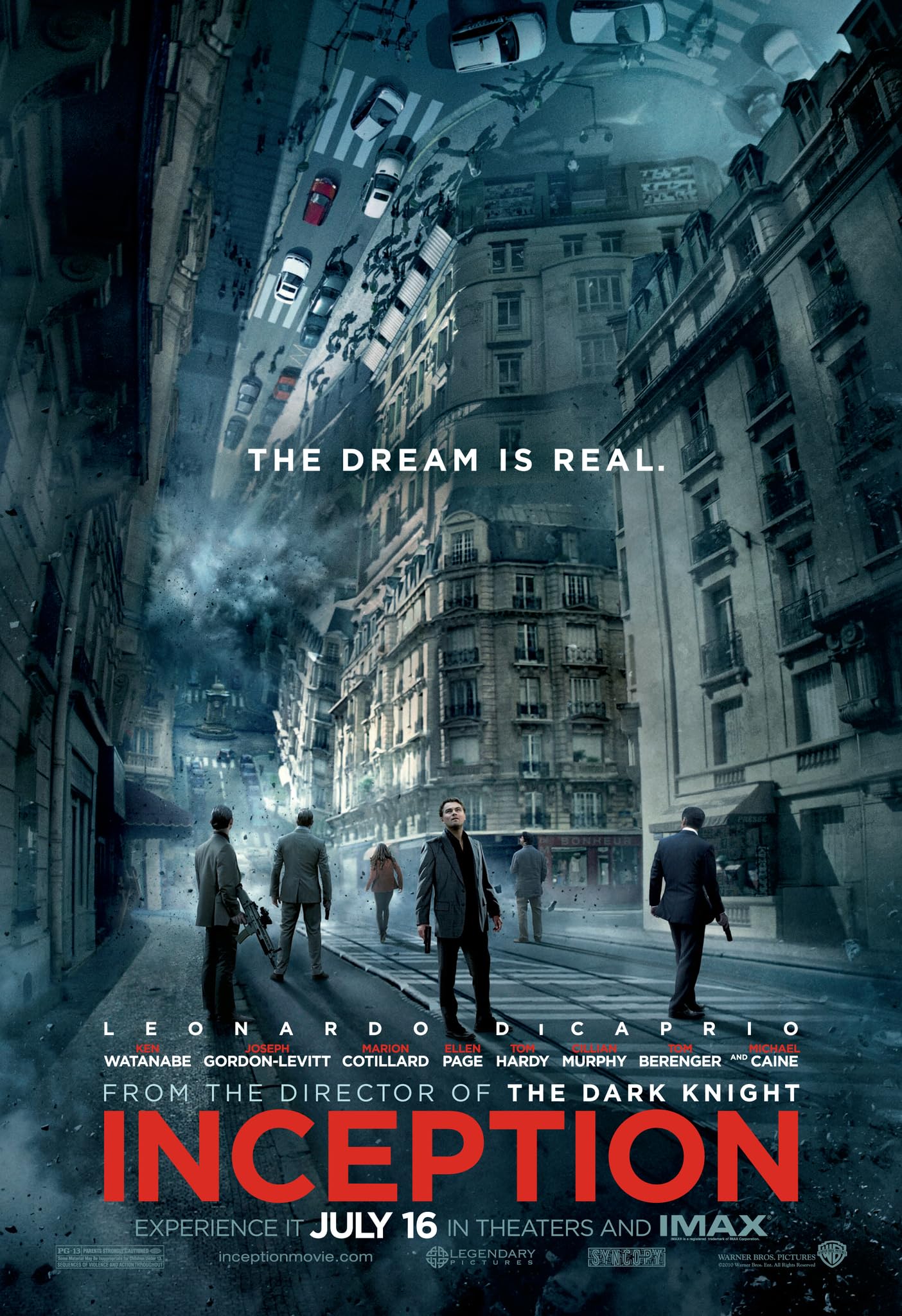
Main Cast
The ensemble keeps shifting roles between dream, memory, and projection, so the cast paragraph matters for explaining who anchors each emotional layer.
- Leonardo DiCaprio
- Marion Cotillard
- Joseph Gordon-Levitt
- Tom Hardy
- Cillian Murphy
- Elliot Page
- Ken Watanabe
- Michael Caine
Awards And Recognition
Inception's technical Oscars show how the industry rewarded craft, but they also punctuate how rare it is for a blockbuster to lean so hard on practical invention while honoring grief.
- Won 4 Academy Awards: Best Cinematography, Best Sound Editing, Best Sound Mixing, Best Visual Effects
- Nominated for 4 additional Oscars: Best Picture, Best Original Screenplay, Best Art Direction, Best Original Score
- Selected for preservation in the National Film Registry by the Library of Congress in 2025
FAQ
Questions Readers Usually Have
These FAQs answer the watch-decision questions I still get asked: how much you need to know going in, whether the visuals carry the film, and what kind of viewers will enjoy Nolan's mix of puzzle and heart.
How long is Inception?
The movie runs 2 hours and 28 minutes, which gives Nolan room to stretch time without losing the heist rhythm.
Who directed and wrote Inception?
Christopher Nolan wrote and directed the film, keeping one creative voice in charge of the puzzles and the emotional beats.
What genre is Inception?
It is tagged as action, science fiction, and thriller, but it behaves more like a dream-state heist that also doubles as a personal drama.
Is Inception too confusing to enjoy on a first viewing?
The structure is dense, yet the heist spine keeps it accessible. You can follow the mission even if you do not catch every rule the first time.
Does Inception reward repeat viewings?
Once you know the layers, you can savor how Nolan plants emotional echoes inside the mechanics, especially in the beach scenes and the kicks.
Is the ending meant to be solved?
The end is purposeful ambiguity. Cobb stepping away from the top is the real answerÔÇöyou do not need to know if it falls.
How much of Inception is practical versus digital effects?
Nolan leaned on practical builds for the hallway, van roll, and snow fortress, then let digital work amplify the scope without replacing the tactile peril.
Does the film work better in theaters or at home?
Its sound mix and sense of scale reward a theater experience, but the layered writing keeps it compelling on repeat streams.
Is Inception appropriate for younger viewers?
It is rated PG-13 and includes gun violence and psychological peril, so mature teens should handle it but watch with guidance.
What makes Inception different from other mind-bending movies?
It balances a blockbuster canvas with an intimately personal crisisÔÇödream mechanics are just the vessel for Cobb's unresolved grief.