Princess Mononoke: Summary, Ending Explained, and Full Analysis
Released in 1997, Hayao Miyazaki's Princess Mononoke (Mononoke-hime) remains one of the most complex, beautiful, and influential anime films ever created. Unlike traditional animated films that present a simple battle between good and evil, Princess Mononoke offers a nuanced, morally grey conflict between nature and human industrial progress. Here is our complete plot summary, character breakdown, and a deep-dive analysis of that unforgettable ending.
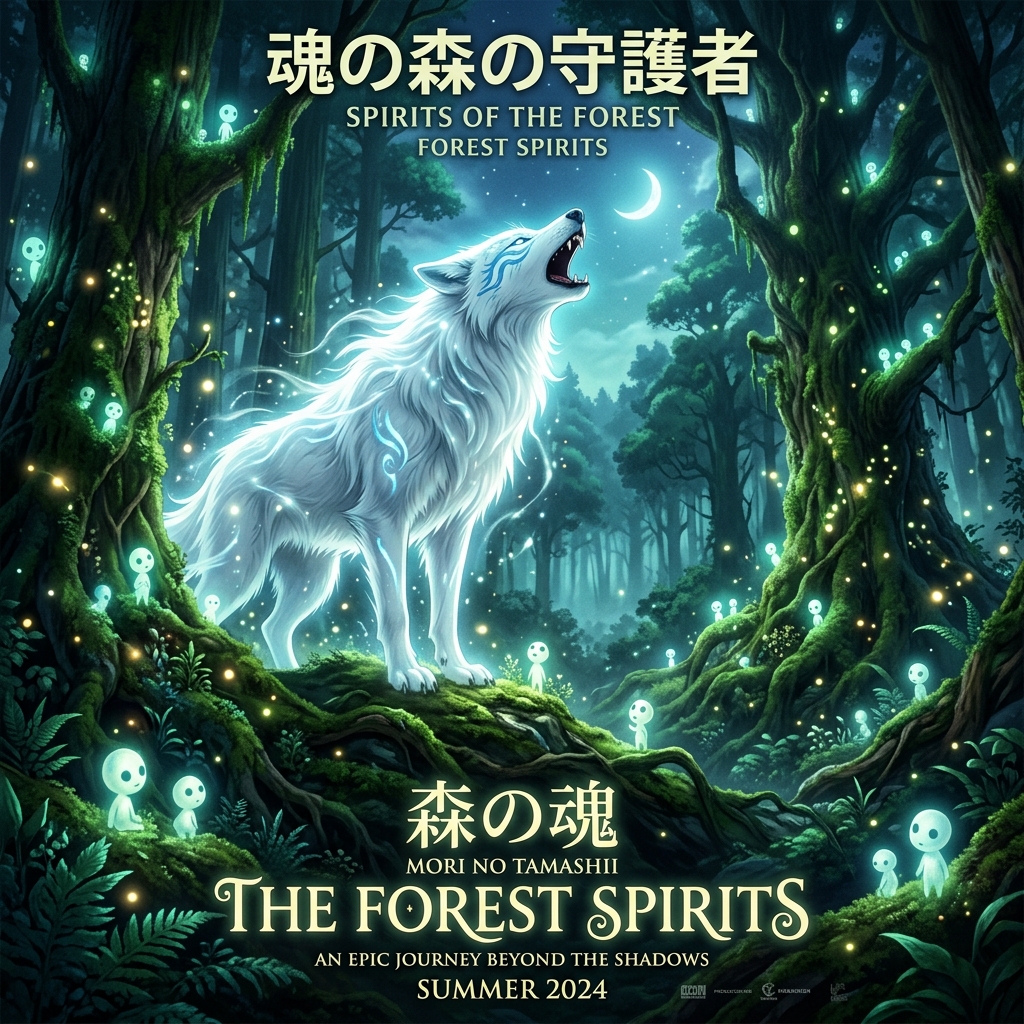
Princess Mononoke Plot Summary
A detailed breakdown of Ashitaka's journey to mediate the conflict between the Forest Gods and Irontown.
The Curse and the Journey (1997)
The story begins with Ashitaka, the last prince of the Emishi tribe, who is cursed by a demonized boar god while defending his village. To find a cure, he must travel west to the lands where the demon originated. There, he discovers a brutal conflict: Lady Eboshi, the leader of Irontown, is clearing the ancient forest to mine iron, while the Forest Gods — led by the wolf goddess Moro and her human adoptive daughter San (the "Princess Mononoke") — fight back with bloody violence.
A sweeping epic that begins with a personal curse and expands into a war for the fate of the natural world.
The Conflict Escalates (1997)
Ashitaka attempts to find a way for both sides to coexist, but the hatred is too deep. Lady Eboshi allies with Jigo, an imperial agent, to hunt down the Great Forest Spirit (Shishigami) and take its head, which is rumored to grant immortality. As the boar clan wages a final, desperate war against the humans, Lady Eboshi succeeds in decapitating the Forest Spirit, triggering a catastrophic ooze that begins consuming all life.
The film's middle act builds tension expertely, showing how greed and hatred can blind humans and spirits alike.
Key Characters & Ideologies
Miyazaki avoids simple villainy, giving every major character a reasonable motivation.
Ashitaka & San (1997)
Ashitaka represents the mediator — he seeks to "see with eyes unclouded by hate." San, raised by wolves, is his ideological opposite: she hates humanity and identifies entirely as a wolf. Their uneasy partnership is the emotional core of the film, representing the struggle to bridge the gap between two incompatible worlds.
Two of animation's most memorable leads, representing the bridge and the barrier between worlds.
Lady Eboshi: The Complex Antagonist (1997)
Lady Eboshi is not a cartoon villain. While she destroys the forest, she uses the ironwealth to buy the freedom of former prostitutes and care for lepers whom society has discarded. To her people, she is a savior; to the forest, she is a destroyer. This moral ambiguity is what makes the film a masterpiece.
One of cinema's greatest anti-villains, illustrating that progress and compassion often come at a terrible ecological cost.
The Ending Explained: Coexistence, Not Resolution
Analyzing the thematic weight of the film's final moments.
The Return of the Head (1997)
In the climax, Ashitaka and San work together to return the Great Forest Spirit's head just as the sun rises. The Spirit transforms, restoring life to the devastated land but disappearing forever. The curse on Ashitaka is lifted, leaving him with a scar to remind him of the journey. Rather than a neat resolution, San decides to stay in the forest, while Ashitaka stays in Irontown, promising to visit her. They choose coexistence over integration.
Miyazaki's refusal to write a happily-ever-after ending is a powerful statement: peace between nature and progress is a continuous effort, not a solved problem.
FAQ
Frequently Asked Questions
Is Princess Mononoke suitable for kids?
Princess Mononoke is rated PG-13. Unlike most Studio Ghibli films, it contains significant violence, including decapitations, severed limbs, and bloody battle scenes. It is best suited for older kids, teens, and adults.
What is the message of Princess Mononoke?
The film explores the tension between environmental preservation and industrial progress. Rather than portraying one side as correct, it argues that both humanity's survival and nature's preservation are valid, and the only path forward is difficult coexistence.
What does "Mononoke" mean?
"Mononoke" is not a name but a Japanese word for a spirit, monster, or phantom. The title translates roughly to "Spirit Princess" or "Monster Princess."
More Studio Ghibli Reviews
If you love the work of Hayao Miyazaki, check out our reviews and guides to other Studio Ghibli classics.